

Navigating the complexities of State Department visas can be a challenging endeavor. This article provides an overview of the process, key visa categories, and essential considerations for applicants. It aims to demystify a system often perceived as labyrinthine, offering a clear path through the various stages of application.
The United States Department of State is responsible for issuing visas to foreign nationals who wish to enter the U.S. These visas are permission slips, not guarantees of entry, which are ultimately decided by Customs and Border Protection (CBP) officers at ports of entry. The type of visa required depends on the applicant’s purpose of travel. This landscape is broad, encompassing temporary stays for tourism, business, study, or work, as well as permanent immigration.
Nonimmigrant vs. Immigrant Visas
The fundamental distinction in U.S. visa policy lies between nonimmigrant and immigrant visas.
- Nonimmigrant Visas: These are for individuals intending to reside in the U.S. temporarily. They are issued for specific purposes and have defined durations. Examples include tourist visas, student visas, and temporary work visas. The applicant must demonstrate intent to return to their home country at the end of their authorized stay. This is a critical hurdle for many and often requires substantial documentation.
- Immigrant Visas (Green Cards): These are for individuals seeking permanent residency in the U.S. They are often sponsored by family members or employers, or granted through special programs like the Diversity Visa Lottery. The process for immigrant visas is typically more extensive and can take significantly longer than nonimmigrant visa processing.
The Role of Consular Officers
Consular officers, stationed at U.S. embassies and consulates abroad, are the gatekeepers of the visa system. They interview applicants, review documentation, and make decisions on visa eligibility based on U.S. immigration law. Their decisions are final, though applicants may reapply if circumstances change or new information becomes available. Understanding their role is crucial; they are not merely administrators but adjudicators of complex legal requirements.
The U.S. State Department plays a crucial role in the visa application process for immigrants seeking to establish their lives and businesses in America. Understanding the intricacies of this process can significantly impact an immigrant entrepreneur’s success. For insights into the mindset and strategies of immigrant entrepreneurs, you can read a related article that explores their journeys and the importance of resilience in overcoming challenges. Check it out here: The Success Mindset of Immigrant Entrepreneurs in America.
The Visa Application Process: A Step-by-Step Guide
The visa application process, while varying slightly depending on the visa type, generally follows a structured sequence. Deviating from this sequence or providing incomplete information can lead to significant delays or denials.
Step 1: Determine Your Visa Type
Before initiating any application, identify the correct visa category for your purpose of travel. The Department of State website (travel.state.gov) offers a comprehensive guide to different visa classifications. Misidentifying your visa type is akin to taking the wrong detour on a long journey; it will likely lead to wasted time and resources.
Step 2: Complete the Online Visa Application (DS-160/DS-260)
The primary application forms are the DS-160 for nonimmigrant visas and the DS-260 for immigrant visas. These forms are submitted electronically and require detailed information about your personal history, travel plans, employment, education, and family. Accuracy and completeness are paramount. Any inconsistencies or omissions can raise red flags during the interview.
Step 3: Pay the Visa Application Fee
A non-refundable application fee is required for most visa categories. The specific fee amount varies and should be confirmed on the embassy or consulate website where you intend to apply. Payment methods also vary by location. Failure to pay the correct fee will halt your application.
Step 4: Schedule Your Visa Interview
Once the application form is submitted and the fee is paid, you can schedule an interview at the nearest U.S. embassy or consulate. Interview wait times can vary significantly by location and visa category. It is advisable to check these wait times well in advance, especially during peak travel seasons. This interview is often the crucible of the application process.
Step 5: Attend the Visa Interview
The interview is a critical stage. You will meet with a consular officer who will review your application, ask questions about your travel intent, and assess your eligibility. Bring all required supporting documents, including your passport, photographs, and any evidence supporting your application. Be prepared to articulate your purpose of travel clearly and concisely.
- Required Documents: This typically includes a valid passport, the DS-160 confirmation page, the fee payment receipt, and a passport-style photograph. Further documents, such as letters of invitation, financial statements, or academic transcripts, depend on the visa type.
- Interview Behavior: During the interview, maintain a respectful and honest demeanor. Answer questions truthfully and directly. Avoid providing unsolicited information unless it directly pertains to a question. Consular officers are trained to detect inconsistencies and misrepresentations.
Key Nonimmigrant Visa Categories
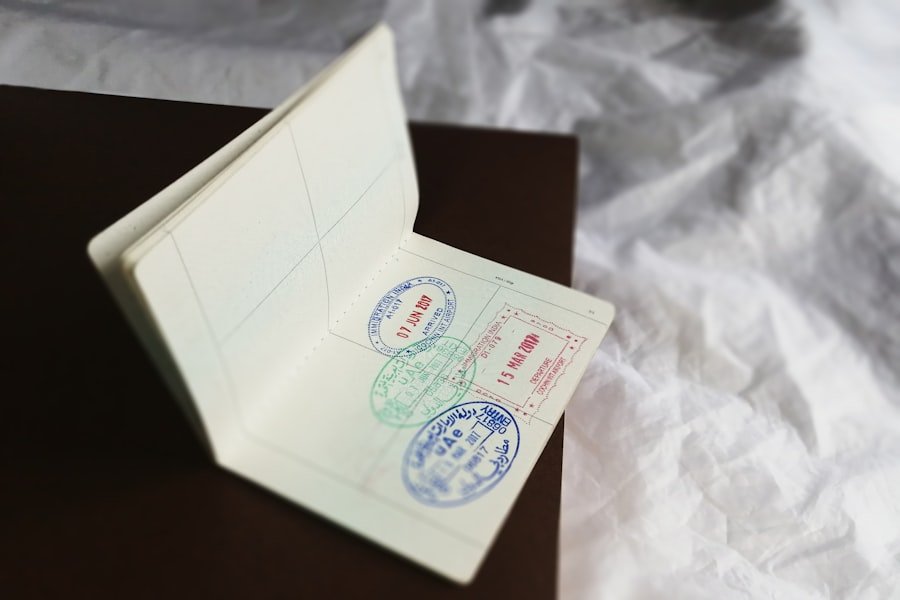
Understanding the specific requirements for common nonimmigrant visa categories is essential for many travelers. These categories serve distinct purposes and come with their own set of regulations.
B-1/B-2 Visas: Business and Tourism
The B visa category is one of the most frequently issued nonimmigrant visas.
- B-1 (Business Visitor): For individuals traveling to the U.S. for business purposes, such as attending conferences, negotiating contracts, or consulting with business associates. This visa does not permit gainful employment in the U.S.
- B-2 (Tourist Visitor): For individuals traveling for tourism, vacation, visiting family/friends, or medical treatment.
- Combined B-1/B-2: Often issued as a single visa for both business and tourism purposes.
F-1 Visas: Academic Students
The F-1 visa is for individuals who wish to pursue a full course of study at an academic institution approved by the Student and Exchange Visitor Program (SEVP).
- SEVIS I-901 Fee: Prospective students must pay the SEVIS I-901 fee in addition to the visa application fee.
- Form I-20: Applicants must possess a Form I-20, “Certificate of Eligibility for Nonimmigrant Student Status,” issued by their chosen educational institution. This document is the cornerstone of the student visa application.
- Demonstrating Intent to Depart: A key challenge for F-1 applicants is demonstrating strong ties to their home country and an intent to return after completing their studies. This often involves showing proof of financial stability, family connections, or career prospects in their home country.
H-1B Visas: Specialty Occupations
The H-1B visa is for individuals coming to the U.S. to perform services in a specialty occupation. These occupations generally require a bachelor’s degree or higher in a specific field.
- Employer Sponsorship: H-1B visas require an employer to sponsor the applicant and file a petition (Form I-129) with U.S. Citizenship and Immigration Services (USCIS) on their behalf.
- Annual Cap: There is an annual statutory cap on the number of H-1B visas issued, making the application process highly competitive, often involving a lottery system.
- Labor Condition Application (LCA): Employers must submit a certified Labor Condition Application to the Department of Labor, confirming that they will pay the H-1B worker at least the prevailing wage for their occupation and that their employment will not adversely affect the working conditions of U.S. workers.
Immigrant Visas: Paths to Permanent Residency
Immigrant visas offer a path to permanent residency (a Green Card) in the United States. These processes are generally more complex and time-consuming than nonimmigrant visa applications.
Family-Sponsored Immigrant Visas
Most immigrant visas are granted through family sponsorship. U.S. citizens and lawful permanent residents can petition for certain family members to immigrate to the U.S.
- Immediate Relatives: This category includes spouses of U.S. citizens, unmarried children under 21 of U.S. citizens, and parents of U.S. citizens (if the citizen is 21 or older). There are no numerical limitations for immediate relative visas, meaning they are not subject to annual quotas.
- Family Preference Categories: Other family relationships, such as married children of U.S. citizens, siblings of U.S. citizens, and various relatives of lawful permanent residents, fall into preference categories. These categories are subject to annual numerical limitations, leading to waiting lists that can span many years.
Employment-Based Immigrant Visas
Employment-based immigrant visas cater to individuals with specific skills or investments who can contribute to the U.S. economy.
- EB-1 (Priority Workers): For individuals with extraordinary ability, outstanding professors/researchers, and multinational executives/managers. This category typically has quicker processing times.
- EB-2 (Professionals with Advanced Degrees/Exceptional Ability): For professionals holding advanced degrees or individuals with exceptional ability in their field.
- EB-3 (Skilled Workers, Professionals, and Other Workers): For skilled workers, professionals with baccalaureate degrees, and other workers in occupations requiring less than two years training or experience.
- EB-5 (Immigrant Investors): For individuals who make significant investments in U.S. businesses that create at least 10 full-time jobs for U.S. workers.
Diversity Visa Lottery (DV Program)
The Diversity Visa (DV) lottery program makes up to 55,000 immigrant visas available annually to individuals from countries with historically low rates of immigration to the United States.
- Eligibility: Eligibility is determined by country of birth, not citizenship. Strict requirements apply regarding education or work experience.
- Random Selection: Participants are chosen through a randomized computer drawing. Being selected does not guarantee a visa, but rather an opportunity to apply for one.
The complexities surrounding State Department visas can often be influenced by broader immigration policies, which makes it essential to stay informed about current regulations. For instance, an article discussing the implications of Trump’s deportation policies highlights who might be at risk and what potential changes could arise in the future. This information can be crucial for individuals navigating the visa process. You can read more about it in this insightful piece on Trump’s deportation policies.
Common Reasons for Visa Denials
| Visa Type | Processing Time (Days) | Annual Quota | Approval Rate (%) | Average Cost |
|---|---|---|---|---|
| B1/B2 (Tourist/Business) | 7-14 | Unlimited | 85 | 160 |
| F1 (Student Visa) | 14-30 | Unlimited | 90 | 160 |
| H1B (Specialty Occupations) | 30-90 | 85,000 | 70 | 190 |
| J1 (Exchange Visitor) | 14-30 | Unlimited | 80 | 160 |
| K1 (Fiancé Visa) | 90-120 | Unlimited | 75 | 265 |
Understanding why visas are denied can help applicants prepare more effectively and mitigate potential issues. A denial is not necessarily a permanent barrier, but it highlights deficiencies in the application or interview.
Section 214(b) – Immigrant Intent for Nonimmigrant Visas
This is perhaps the most common reason for nonimmigrant visa denials. U.S. law assumes all nonimmigrant visa applicants are intending immigrants until they prove otherwise. Applicants must overcome this presumption by demonstrating:
- Strong Ties Abroad: Significant connections to their home country, such as family, property, employment, and financial assets, indicating a compelling reason to return.
- Finite Purpose of Visit: A clear and temporary purpose for their visit to the U.S., with specific dates for departure.
- Sufficient Funds: Adequate financial resources to cover all expenses during their stay without resorting to unauthorized employment.
Section 212(a) – Ineligibilities
Found in the Immigration and Nationality Act (INA), Section 212(a) outlines various grounds for visa ineligibility. These grounds are broad and can result in significant obstacles to visa approval.
- Health-Related Grounds: Certain communicable diseases, physical or mental disorders, or drug abuse/addiction can render an applicant inadmissible.
- Criminal and Related Grounds: Convictions for certain crimes, particularly those involving moral turpitude, drug trafficking, or multiple offenses, can lead to denial.
- Security and Related Grounds: Espionage, terrorism, or other activities deemed to threaten U.S. national security.
- Public Charge Grounds: If an applicant is deemed likely to become a “public charge” (i.e., financially dependent on the U.S. government), they may be denied.
- Illegal Entry and Immigration Violations: Previous immigration violations, such as overstaying a prior visa or attempting illegal entry, are significant barriers.
- Misrepresentation and Fraud: Providing false information or misrepresenting facts during the application process can lead to permanent ineligibility. This is a severe impediment, often with no waiver available.
Incomplete Documentation or Incorrect Procedure
Simply failing to provide all required documents, or submitting them incorrectly, can lead to immediate denial or delay. The visa process demands meticulous attention to detail. Treat each document as a brick in the foundation of your application; if one is missing or faulty, the structure weakens.
Tips for a Successful Visa Application
While there are no guarantees, several practices can significantly enhance your chances of a successful visa application.
Prepare Thoroughly
Gather all required documents well in advance. Create a checklist and double-check each item. Ensure all information provided on the application forms is accurate and consistent with your supporting documents. Practice articulating your purpose of travel concisely.
Be Honest and Transparent
Always be truthful in your application and during your interview. Consular officers are skilled at identifying inconsistencies and falsehoods. Any attempt at misrepresentation can lead to permanent bars from entering the U.S. Honesty is not merely good practice; it is a legal requirement.
Demonstrate Strong Ties
For nonimmigrant visas, effectively demonstrate strong ties to your home country. This could include property deeds, family certificates, employment letters, financial statements, and evidence of ongoing education or business interests. The more substantial your roots appear to be, the stronger your case against immigrant intent.
Understand Your Visa Category
Be fully knowledgeable about the requirements and limitations of the specific visa category you are applying for. This understanding will enable you to answer questions confidently and avoid missteps.
Maintain Professionalism
During the interview, present yourself professionally. Dress appropriately, be polite, and maintain eye contact. Answer questions clearly and directly, without volunteering unnecessary information. Treat the interview as a formal legal proceeding.
Navigating State Department visas is a structured process demanding precision, honesty, and thorough preparation. By understanding the categories, procedures, and potential pitfalls, applicants can significantly improve their chances of a successful outcome. The journey through the visa system may be complex, but with diligence, it is navigable.